
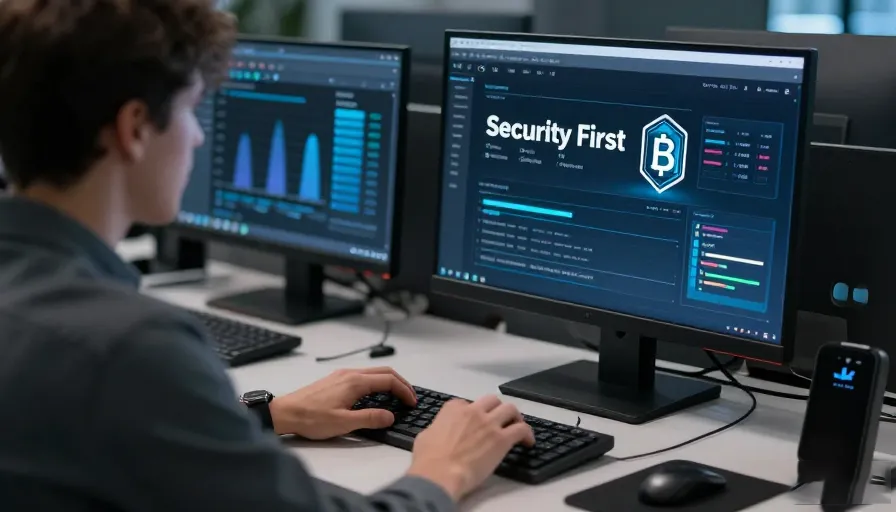
In the realm of digital assets, security is not merely an afterthought—it serves as the cornerstone upon which all successful trading is established. However, for many newcomers, the intricacies of wallet management, private keys, and scam prevention are often grasped only after incurring a costly error. A crypto trading simulator can function as more than just a platform for executing trades—it can offer a thorough environment for acquiring security best practices prior to engaging with real funds.
The cryptocurrency sector has witnessed billions of dollars lost due to hacks, phishing schemes, and basic user mistakes. Sending funds to an incorrect address, being deceived by a counterfeit exchange website, or revealing a private key can lead to irreversible loss. For novice crypto trading enthusiasts, these dangers can be daunting. A crypto exchange simulator offers a secure setting to rehearse security measures without the anxiety of permanent repercussions.
Practicing Wallet Management
One of the first lessons any crypto trader must learn is the difference between custodial and non-custodial wallets. A crypto trading platform like an exchange holds your funds on your behalf, while a non-custodial wallet gives you full control—and full responsibility. A crypto trading simulator can include modules where you practice setting up wallets, backing up seed phrases, and executing test transactions.
Some advanced simulators even allow you to practice interacting with defi simulator environments, where you must approve smart contract interactions and manage token allowances. These exercises teach you to read transaction previews carefully, recognize suspicious approvals, and revoke unnecessary permissions—all critical skills for anyone venturing into decentralized finance.
Identifying Scams and Phishing Attempts
The crypto space is unfortunately rife with scams. Fake exchanges, impersonator accounts, and phishing links are constant threats. A well-designed crypto game or crypto challenge can include educational modules that teach users to identify red flags. You might be presented with a series of websites or messages and asked to determine which are legitimate and which are scams. This interactive approach is far more effective than reading about scams in a blog post.
For those using crypto paper trading to learn, the simulator itself can model security scenarios. For example, you might receive a simulated “phishing email” within the platform and be tested on whether you click the link. These exercises build real-world awareness that protects your actual funds later.
Simulating Exchange Security Features
Reputable crypto trading platform providers offer security features like two-factor authentication (2FA), withdrawal whitelists, and anti-phishing codes. A crypto exchange simulator can walk you through setting up these features, explaining why each matters and how they work together to protect your account. You can practice enabling 2FA, generating backup codes, and configuring withdrawal address whitelists—all in a risk-free environment.
Custody and Inheritance Planning
For traders building significant crypto portfolios, long-term security considerations like multisignature wallets and inheritance planning become relevant. While these topics may seem advanced, a comprehensive crypto trading simulator can introduce them gradually. You might simulate setting up a multisig wallet with trusted family members or practice documenting access instructions for future heirs.
Ultimately, the objective of engaging in security practices within a crypto market simulator is to cultivate habits that become second nature. Just as one practices trade execution to enhance muscle memory, adhering to security protocols instills behaviors that safeguard your capital. When you eventually move to a real crypto trading platform, you will possess the confidence and discipline necessary to secure your accounts effectively.
For those who are genuinely committed to learning how to trade crypto, security must not be regarded as an afterthought. By utilizing a crypto trading simulator to develop security proficiency alongside trading abilities, you guarantee that your venture into digital assets is not only lucrative but also secure.
