
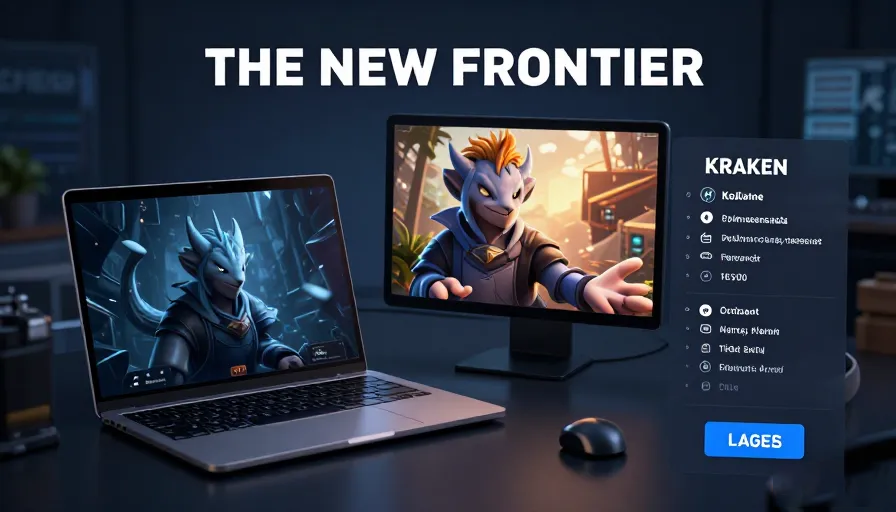
Two major developments are transforming user interaction with cryptocurrency markets: established exchanges venturing into prediction markets, and the rise of immersive PC-based trading simulators. These advancements indicate an expansion of the crypto ecosystem beyond conventional trading.
Kraken Enters the Prediction Market Arena
According to a CNBC report, cryptocurrency exchange Kraken plans to launch prediction market services in 2026. Mark Greenberg, Kraken’s Global Consumer Business Head, revealed the plans during the Crypto World program .
Prediction markets allow users to bet on the outcomes of real-world events—elections, economic indicators, sports results, and more—using cryptocurrency. These platforms have gained significant traction in recent years, offering a decentralized alternative to traditional betting markets. Kraken’s entry into this space signals growing institutional recognition of prediction markets as a legitimate crypto sector .
For traders accustomed to using crypto trading simulators to practice their skills, prediction markets represent a new frontier. The ability to test forecasting abilities in simulated environments before committing real funds aligns perfectly with the educational philosophy behind paper trading tools. Industry observers suggest that Kraken’s move could accelerate the convergence of trading education, gamification, and real-market participation.
Crypto Trading Simulator: The PC Gaming Experience
On the gaming front, a new title titled Crypto Trading Simulator is slated for release in the second quarter of 2026. Unlike mobile apps focused on basic trading practice, this PC-based game offers a fully immersive simulation environment with dynamic market mechanics, advanced analytical tools, and extensive customization options .
Players begin with limited virtual capital and must make trading decisions in a reactive market environment influenced by simulated events, global news, and social media dynamics. The game tracks how market sentiment shifts with events like “airdrop announcements, exchange hacks, fee adjustments, or influencer posts” . Some trends are fleeting, while others reshape the market entirely—forcing players to adapt quickly or lose their edge.
Advanced Tools for Serious Practice
The game includes professional-grade analysis tools such as trend lines, RSI, volume indicators, and Bollinger Bands, allowing players to draw directly on charts and mark entry and exit points . Performance is tracked through detailed reports and visualizations, enabling players to identify patterns and refine strategies.
A progression system allows players to reinvest simulated profits into software upgrades, trading bots, and room customizations—transforming a basic workspace into a “high-end command center filled with RGB lighting and luxury equipment” . Social media feeds within the game populate with posts from traders, analysts, and influencers, adding another layer of realism to the market simulation.
Implications for Crypto Education
The arrival of a dedicated PC crypto simulator game represents a maturation of the educational tools available to aspiring traders. While mobile apps like CryptoSim and Gocrypto offer accessible entry points, a PC-based title with advanced analytical features and complex market simulations caters to more serious users who want to develop professional-grade skills .
As notes in its educational materials, effective paper trading requires more than just placing virtual orders—users must understand “order types, market analysis, risk management essentials, and the difference between spot and futures trading” . A game that integrates these concepts into an engaging, narrative-driven experience could prove more effective than traditional educational content.
With Kraken expanding into prediction markets and developers releasing sophisticated trading simulation games, 2026 is shaping up to be a transformative year for crypto education and engagement. These developments lower barriers to entry, provide safe environments for skill development, and ultimately prepare users for more informed participation in live markets—whether on traditional exchanges, prediction platforms, or emerging decentralized venues.
