
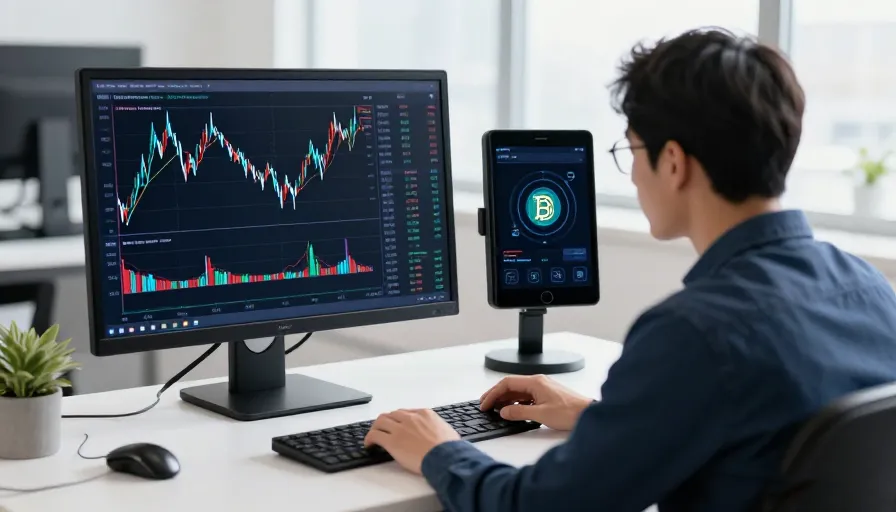
Every consistently profitable trader has a fundamental habit: maintaining a trading journal. Documenting each trade, the rationale behind it, the results, and the emotions felt generates a feedback loop that enhances improvement. A cryptocurrency trading simulator offers an ideal setting to cultivate this habit prior to engaging in real-money trading. By integrating virtual cryptocurrency trading with methodical journaling, you create a solid foundation that will support you throughout your trading journey.
Why Journaling Matters
Trading is as much about psychology as it is about analysis. Without a journal, it’s easy to repeat the same mistakes—revenge trading, moving stop-losses, entering without confirmation—without ever realizing it. A cryptocurrency simulator gives you a safe space to make these mistakes and, more importantly, to document them. Over time, your journal becomes a roadmap of your development, showing you which strategies work, which setups you excel at, and which emotional triggers you need to manage.
What to Track in Your Simulator Journal
When using a crypto paper trading tool, your journal should include:
- Trade details: Asset, direction, entry and exit prices, position size, and time held.
- Setup rationale: Which technical indicators or fundamental factors prompted the trade? Was it a bitcoin trading simulator setup based on halving expectations, or a defi simulator opportunity based on yield metrics?
- Emotional state: Were you feeling confident, anxious, or impatient? Did FOMO play a role?
- Outcome and lessons: What went right? What would you change?
Many crypto trading platform simulators offer built-in journaling features or integrate with third-party tools. Some even gamify the process through crypto challenge modules that prompt you to reflect after each trade.
Using Journal Data to Improve
After a month of virtual trading, review your journal. You’ll likely spot patterns. Perhaps your day trading crypto entries are profitable in the first hour of the session but unprofitable later. Maybe you consistently exit winners too early or hold losers too long. This data-driven insight allows you to refine your approach systematically. A crypto market simulator combined with journaling transforms vague intuition into measurable improvement.
From Simulator Journal to Real Trading
When you transition to a real crypto trading platform, your journal habit should transition with you. Continue logging every trade, no matter how small. The journal becomes your anchor during emotional moments—when you’re tempted to abandon your strategy during a bull run crypto frenzy, your journal reminds you of the discipline that made you profitable in simulation. Some traders maintain separate journals for their crypto paper trading experiments and real trades, allowing them to test new strategies virtually while executing proven ones live.
Rewarding the Habit
Some crypto game platforms encourage journaling through crypto rewards. Completing a crypto challenge that involves reflecting on trades might earn you points or small token rewards. While the rewards themselves may be modest, the habit they reinforce is invaluable. For beginner crypto trading, establishing a journaling routine early is one of the best investments you can make in your trading future.
A cryptocurrency trading simulator serves not merely as a venue for practicing entry and exit strategies; it functions as a laboratory for personal exploration. By combining simulation with methodical journaling, you cultivate the self-awareness and accountability essential for enduring success.
